Aria
Since 1956
Aria was founded by Shiro Arai in Nagoya, Japan in 1956—the brand name an anagram of his surname, also carrying the musical meaning of a solo vocal piece. Starting as a guitar importer and sheet music distributor, Arai partnered with Matsumoku to manufacture guitars that challenged American dominance in the 1970s and 80s. The Aria Pro II PE series became a flagship that rivaled Gibson and Yamaha in Japanese guitar culture. Known for exceptional build quality at accessible prices, Aria helped establish Japan as a world-class guitar manufacturing nation alongside Ibanez, Yamaha, and Greco.
70
Years in Business
5M+
Guitars Sold
$20M+
Annual Revenue
Complete Aria Guitar Price & Valuation Guide (2026)
Comprehensive market valuation ranges, mint vs used condition pricing, tonewood specs, and historical price trends for Aria guitars.
Aria Price Overview
Aria covers a wide range of instruments from entry-level to professional models. Typical used prices vary by condition, series and year. Higher-end USA models and limited editions retain value better than mass-market lines, while rare or vintage pieces often command significant premiums.
When evaluating value, consider originality (pickups, hardware), structural condition (neck, frets, finish) and documentation (serials, receipts, setup reports). Price dispersion across platforms is common; local stores offer service and inspection, whereas online marketplaces provide broader selection and price transparency.
For detailed buying advice, model comparisons and condition-based pricing, read the full guide linked above.
Market Overview
Average Price
$450
+5% vs last year
eBay Listings
1,500
Active listings
Sold This Month
280
+4% vs last month
Price Range
$80-$3,000
Current market range
Data sourced from eBay, Reverb, and Guitar Center used listings
Aria Timeline
Arai Trading Founded
Shiro Arai established Arai Trading Co., Ltd. in Nagoya, importing guitars and sheet music. The 'Aria' brand name is an anagram of Arai.
Matsumoku Partnership
Partnered with Matsumoku to manufacture semi-acoustic guitars during Japan's Group Sounds music boom.
Aria Pro II Launched
Introduced the Aria Pro II brand for electric guitars, signaling professional-grade ambitions that would challenge American and European makers.
PE Series Debut
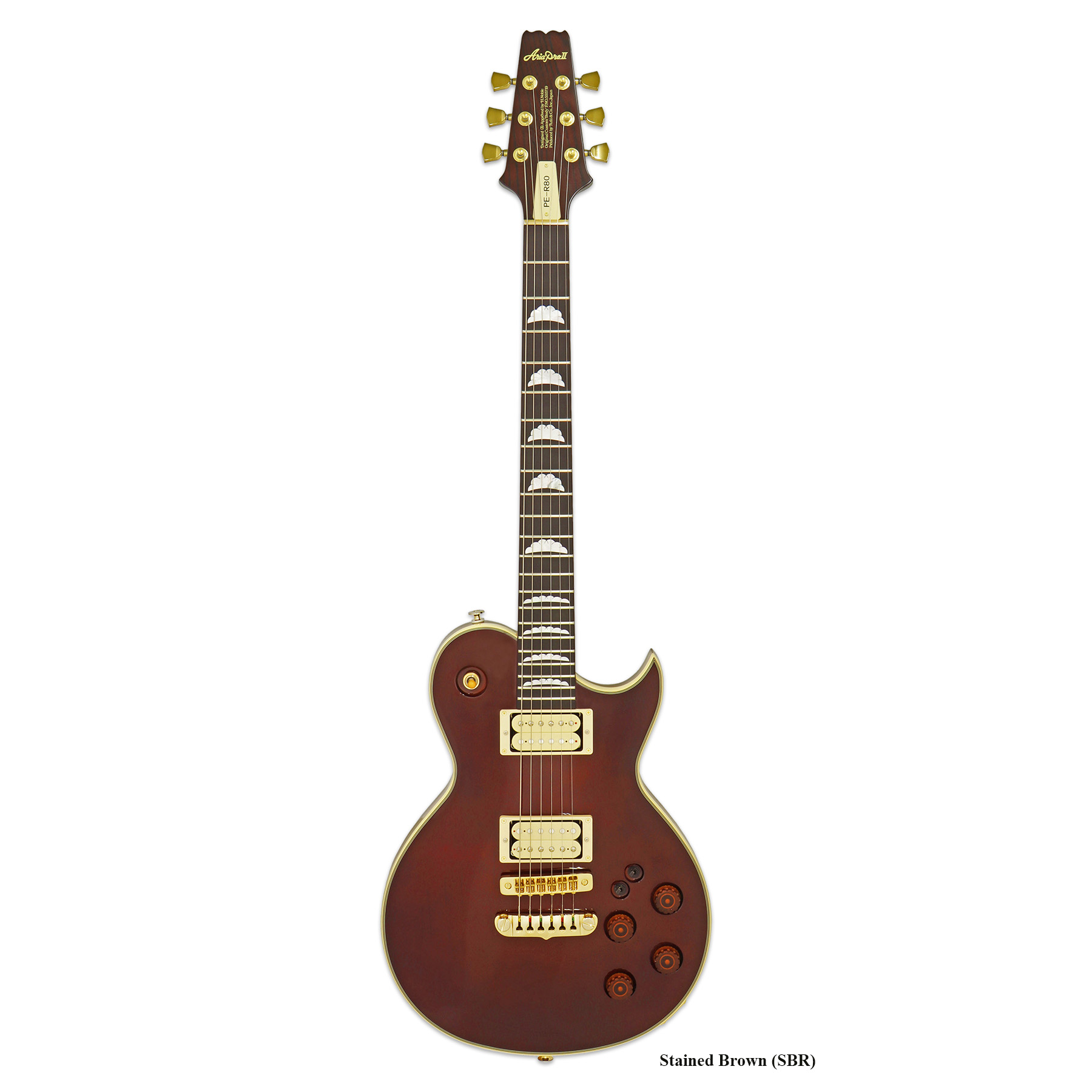
Launched the PE (Pro Electric) series flagship—curved top, heel-less neck, DiMarzio pickups. Competed directly with Yamaha SG and Greco GO.
SB Bass Series
Released the SB bass series with Cliff Burton-approved quality, further establishing Aria Pro II in the professional market.
RS Series for Metal
Introduced the RS Wildcat and RS Knight Warrior series targeting the growing heavy metal market.
Matsumoku Closes
Manufacturing partner Matsumoku closed. Aria transitioned production to other Japanese and Asian factories.
International Expansion
Expanded distribution worldwide, making Aria guitars available across Europe, Asia, and the Americas.
Japanese Vintage Renaissance
1970s-80s Aria Pro II guitars gained cult collector status as the Japanese vintage guitar market matured.
PE Series Revival
Reissued classic PE models including the PE-R100 (Japan-made Platinum Collection) and PE-F80, honoring the flagship heritage.
Complete Aria Product Lineup
Aria: Japan's answer to Gibson—craftsmanship, innovation, and soul since 1956
PE Series (Flagship Electric)
The iconic Aria Pro II carved-top design
Platinum Collection MIJ at ~$1,200+
Premium PE at ~$599-$799
Set-neck flagship at ~$499-$599
Accessible PE at ~$419-$489
Electric Guitar Series
Various electric styles and configurations
Single-cut at ~$299
Double-cut at ~$349
Semi-hollow at ~$449
Modern design at ~$399
Acoustic & Classical
Traditional acoustic instruments
Steel-string acoustics at ~$199-$599
Classical guitars at ~$149-$499
Premium acoustics
Bass Guitars
Professional bass instruments
Classic Aria Pro II bass
Modern active bass
Jazz-style bass
Vintage Collectibles
1970s-80s Aria Pro II classics
Original flagship—$800-$2,000+
1980s set-neck—$600-$1,500
Cliff Burton fame—$800-$2,000
1980s metal—$400-$1,000
"Aria: Japan's answer to Gibson—craftsmanship, innovation, and soul since 1956"
Model-Specific Buying Guide
Each model has unique characteristics that affect both tone and value. Here's what to look for when buying specific models.
PE Series Buying Guide
The Japanese Les Paul Alternative
The PE series offers carved-top, set-neck construction with a distinctly Japanese refinement. Smoother heel, easier upper-fret access, and meticulous build quality at $419-$1,200+
Japan-Made Premium
The PE-R100 Platinum Collection is made in Japan—the same quality tier as vintage 1970s-80s models. MIJ Aria guitars command significant premiums and hold value exceptionally well
Vintage PE Appreciation
Original 1977-1985 PE models have appreciated 5-8% annually as Japanese vintage guitars gain global recognition. PE-1500 originals at $800-$2,000+ are genuine collectibles
Vintage Aria Pro II Guide
Matsumoku-Era Quality
Guitars built by Matsumoku (1963-1987) represent Aria's golden age. The factory produced instruments with exceptional build quality that rivaled American brands at half the price
SB Bass Cult Status
The SB-1000 bass achieved cult status partly through Cliff Burton's use with Metallica. Original SB basses at $800-$2,000 are appreciating as thrash metal nostalgia grows
Authentication Tips
Check serial numbers for Matsumoku-era production. Japanese-made models have different serial formats from later Korean/Chinese production. Original pickups and hardware increase value significantly
Used Aria Buying Guide
Massively Undervalued
Used Aria guitars are among the best values in the market. A used PE-350 at $300-$400 delivers set-neck construction and quality pickups that compete with guitars costing twice as much
Origin Matters
Japan-made (MIJ) Aria guitars command 2-3x premiums over Korean or Chinese-made equivalents. Check serial number and construction details to identify origin
Import From Japan
Many excellent Aria models were Japan-market only. Yahoo Japan Auctions and Japanese vintage dealers offer models unavailable domestically—shipping adds cost but selection is unmatched